

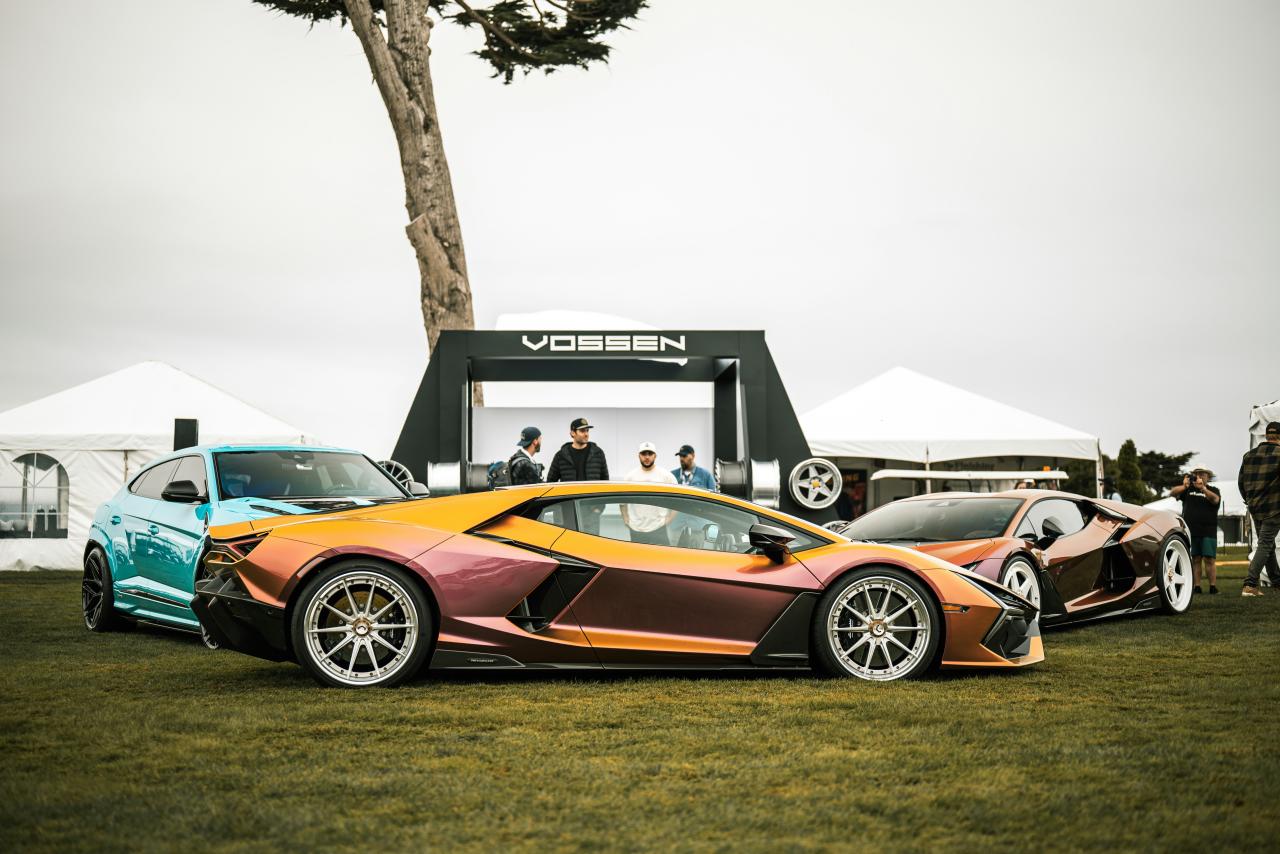
The current global investment landscape for premium automotive assets has entered a transformative era where traditional metrics are being replaced by value-driven data and brand-level scarcity. Institutional investors are shifting their focus away from mass-production cycles toward high-margin, low-volume producers that maintain total control over their supply lines and customer experiences. This transition represents a significant departure from the historical reliance on heavy volume and seasonal discounts, favoring instead those entities that cultivate immense brand loyalty through limited-run models and direct-to-consumer relationships. As the wealth gap widens in major economies, the demand for exclusive vehicles that serve as both status symbols and stable stores of value has increased dramatically.
Savvy market participants now recognize that true alpha in this sector is derived from analyzing the precise balance between production caps, technological integration, and the ability to dictate market pricing without external influence. Furthermore, the convergence of high-end manufacturing with cutting-edge digital connectivity has created new revenue streams that remain immune to standard inflationary pressures. Those who can identify these signals early are securing positions in companies that effectively hedge against general economic instability while offering upside linked to the growth of ultra-wealthy demographics.
The focus is no longer on how many units move off the lot, but on the long-term appreciation of the assets themselves. By understanding the intricate dynamics of these specialized manufacturers, investors can build portfolios that thrive regardless of the broader economic narrative. This analysis aims to illuminate the path toward consistent returns within the elite tier of the global automotive trade. The implementation of advanced value-capture standards has reached a level of maturity that allows for the total transformation of legacy investment strategies and physical asset management. Market participants are now utilizing these rigorous, data-driven frameworks to drive higher valuation multiples and secure preferential capital positions in a competitive global environment.
Ultra-Premium Brand Equity Valuation
The primary pillar of the elite automotive economy is the transition from standard stock valuation to institutional-grade brand equity analysis.
Successful participants utilize deep-data sets to evaluate the strength of a manufacturer’s name, ensuring that the brand can command a premium price regardless of material costs.
High-performing operators in this space often realize significant valuation jumps as they move from “mass-market-utility” to “luxury-status-provider” for global investors.
Investors favor platforms that can demonstrate a proven increase in margin per vehicle through sheer brand desirability.
The ability to turn a standard sedan into a globally recognized status asset is a hallmark of a sophisticated market participant.
Unique capital allocation toward high-equity brands is the physical engine that drives modern transactional alpha outperformance.
High-Frequency Production Capacity Analysis

The bottleneck of the luxury automotive industry is often the artificial scarcity of high-demand models, which is now being evaluated by high-frequency production analysis.
These breakthroughs involve tracking the specific delivery timelines of hyper-car manufacturers to ensure that production remains below demand.
Consistent scarcity allows for the creation of resale value that supports the primary manufacturer’s ability to keep high price floors.
Integrated production oversight often leads to higher institutional trust and lower operational risk profiles for luxury automotive houses.
The reduction in reliance on traditional volume-based growth metrics is highly valued by global hedge funds and portfolio managers.
Production scarcity management is the operational stability pillar of the modern high-end automotive asset.
Strategic Supply Chain Independence
The move toward operational independence involves securing the core inputs of the manufacturing process to avoid external bottlenecks.
Automotive firms that own their raw material sourcing or have deep, exclusive partnerships see a marked improvement in their bankability during global shortages.
These companies protect their margins by avoiding the common pitfalls of reliance on volatile global logistical networks.
Investors prioritize companies that can demonstrate a clear “near-monopoly” over specific high-value components or raw materials.
A seamless manufacturing experience within a secure supply chain landscape is now a primary performance metric for strategic resource providers.
Supply chain independence is the strategic moat that protects the long-term value of the rare asset.
Institutional-Grade Direct Sales Integration
The final value-capture in the elite automotive sector occurs at the stage of high-purity direct sales and digital delivery tracking.
Firms that plan for an end-to-end sales process allow for “margin-stacking” and total control over the buyer’s journey from start to finish.
This vertical approach transforms a hardware manufacturer into a high-tech service provider, commanding significantly higher valuation multiples from institutional investors.
Integrated sales models often qualify for higher government subsidies and “national-champion” status in their respective jurisdictions.
The reduction in cost volatility through direct ownership of the customer relationship is highly valued by global automotive and tech analysts.
Vertical sales integration is the operational stability pillar of the modern technology asset.
Real-Time Pricing Power Verification
To hedge against market saturation, sophisticated participants are verifying the pricing power of companies through real-time secondary market data.
These networks utilize “market-agents” to confirm the identity and financial standing of buyers before granting access to high-value transactions.
High-fidelity access is no longer a luxury but a requirement for accessing premium markets where speed and trust are the primary commodities.
Sophisticated decision-makers utilize these exclusive gates to manage internal network quality and anticipate future liquidity shifts.
Entities that prioritize community assurance over immediate mass-market growth see a marked improvement in their long-term asset stability.
Exclusive market intelligence is the barrier of the next generation of high-end industrial ecosystems.
Vertical Integration of Proprietary Tech
The discovery of growth bottlenecks is being accelerated by the creation of private technology networks that manage data flows and internal components.
Companies are utilizing technology to predict when a specific vehicle component might become outdated or identify where innovation is slowing down.
Sophisticated teams are now deploying sub-second data transmission from private sensors to guide real-time development adjustments.
Understanding these technical disparities is critical for portfolio rebalancing in a sector with high operational costs and significant upside.
High-fidelity data removes the valuation lag associated with opaque manual industry reports.
Internal development coordination is the analytical compass for the modern high-end participant.
Geographic Wealth Concentration Exposure
The most significant returns are found in geographic regions that demonstrate high concentrations of ultra-high-net-worth individuals.
Autonomous agents are uniquely suited to routine luxury tasks, such as managing dealership calendars, organizing private transport, and sourcing limited-run goods.
This service displacement allows ultra-wealthy individuals to reclaim their time for personal investment rather than mere maintenance.
Investors prioritize companies that can demonstrate a clear lead over high-value dealership and estate management tools.
A seamless resident experience within the modernized service stack is now a primary performance metric for strategic luxury providers.
Service displacement is the strategic moat that protects the long-term value of the high-end digital asset.
High-Margin Service and Maintenance Moats
The transparency gap in the legacy automotive market is being closed by high-end service services that modernize traditional maintenance.
These “Modernization Kits” provide immutable proof that a classic asset has been updated with modern tech while retaining its original character.
High-fidelity maintenance is essential for maintaining asset value in a world of increasing regulatory and aesthetic pressure.
Integrated service improvements often lead to a premium pricing model for verified, high-performance assets.
The reduction in depreciation risk through transparent history is highly valued by global dealers and high-end investors.
Asset maintenance is the verification mechanism for the twenty-first-century digital luxury house.
Automated Demographic Targeting Models
The future of automotive investment belongs to those who view their portfolios as high-cognitive wealth systems.
A luxury investor must be able to design portfolios that are resilient by design, automatically reallocating assets across multiple global markets.
Interoperability ensures that the participant’s total wealth functions as a single, unified machine rather than a collection of isolated, dormant holdings.
Owners who prioritize demographic design see a marked improvement in the adaptability of their total asset base.
The ability to achieve relevance at scale in complex, hybrid-wealth environments is the hallmark of a sophisticated participant.
Cognitive design is the digital highway of the high-performance wealth asset.
Strategic Asset Liquidation and Resale Alpha
The final secret to high-end alpha is identifying how to reallocate institutional capital toward high-value strategic and creative goods.
By automating the routine work of high-end asset tracking, institutional managers can focus on product-market fit, user experience, and high-level distribution. Human-in-the-loop governance ensures that the automated systems remain aligned with the entity’s ethical and strategic financial goals.
Transparency in institutional management is essential for securing large-scale capital for further wealth expansion. Performance-based tracking ensures that the asset budget is being applied toward maximizing the acquisition value of the total portfolio. Institutional capital flow is the verification mechanism for the twenty-first-century strategic luxury participant.
Navigating Global Manufacturing Disruptions
It is vital for any serious participant to understand how to navigate the waves of global manufacturing disruption. A focus on localized hubs can provide the stability that global shipping lacks.
Companies that emphasize domestic manufacturing for their highest-margin items are often better insulated from political headwinds. These participants tend to hold their value longer because their supply chains are less likely to break during international crises. This creates a sense of confidence in the market, which in turn drives higher share prices. The ability to foresee and mitigate these issues is a hallmark of a mature firm.
Analyzing the Impact of Digital Integration
Technology integration is changing the core nature of what it means to be a luxury car brand. It is no longer enough to offer top-tier materials; one must also offer top-tier digital experiences.
Brands that invest heavily in their own software ecosystems are finding that they can charge more for the same underlying hardware. These digital features are often easier to update over time, leading to lower depreciation for the owner. This, in turn, makes the brand more attractive to long-term buyers. It is a shift that is currently being played out by the most successful firms in the sector.
Brand Provenance and Historical Resilience
Provenance is becoming an increasingly important factor for automotive investors looking to protect their capital. The historical trajectory of a brand’s racing success and its commitment to specific design languages provide a level of security. When a brand maintains its heritage while embracing modern demands, it gains an almost unassailable market position.
Investors view this commitment to heritage as a sign of quality that does not fade with time. It ensures that the firm will continue to attract high-end buyers for generations to come. This is why historical prestige remains a key metric for modern valuation.
Trends in Hybrid Wealth Portfolios
Modern portfolios often contain a mix of tangible luxury cars and high-growth automotive stocks. This balance allows for both immediate enjoyment and long-term capital appreciation. It represents a holistic approach to wealth that ignores the traditional boundaries of market segments.
Entities that offer products that serve both purposes are attracting more attention than ever before. They provide a unique value proposition that is difficult for traditional firms to replicate. It is a trend that points toward a more interconnected future for all high-end asset classes.
The Dynamics of Scarcity and Asset Floor Pricing
Floor pricing is the hidden metric that keeps luxury automotive brands afloat during tough times. By strictly limiting supply, manufacturers ensure that their vehicles never become “common.”
This creates a base level of value that remains relatively stable regardless of what happens to the global stock market. Investors who understand this dynamic know exactly when to enter a position. They are not looking for short-term spikes but for stable growth underpinned by genuine rarity. This is the conservative foundation for much of the wealth generated in the sector.
Aligning Luxury with Sustainable Tech Gains
Sustainable tech is no longer just for eco-conscious cars, but for the luxury market as a whole. High-end buyers are increasingly demanding efficiency that doesn’t compromise on power or aesthetic.
Firms that can marry these two concepts are finding themselves in a position of significant power. This move toward cleaner technology is opening up new markets that were previously closed to premium players. It allows them to capture a new generation of buyers who have both high wealth and high environmental expectations. This represents a crucial growth vector for the coming decade.
Globalization and Market Hub Expansion
New automotive hubs are springing up in regions that were previously seen as secondary markets. These hubs provide access to new buyers who are eager to show off their success through exclusive vehicles. It is a massive opportunity for brands that can expand their reach without diluting their prestige.
Managing this expansion requires a fine touch and a deep understanding of local luxury culture. Brands that succeed in this will be the ones that effectively combine their heritage with local sensibilities. It is a challenging but necessary step for growth in the modern economy.
The Psychology of Elite Automotive Selection
Luxury car selection is driven by the desire for distinction in a crowded world. It is about being part of an exclusive club that is defined by its tastes and its financial capability.
Understanding the specific nuances of what drives this selection is vital for any market participant. When a brand taps into this psychology, it creates a bond that is stronger than any traditional marketing campaign.
It is this deep level of engagement that keeps buyers loyal for decades. The most effective market players are those who treat their customers as partners in an exclusive journey.
Conclusion

Investment success in this field relies on deep brand knowledge. Capital flows are dictated by those who prioritize scarcity over volume. Automotive alpha is built upon a foundation of proprietary manufacturing and brand strength. Data-driven production oversight eliminates the errors common in volume-focused strategies. Premium automotive assets transform static equity into active, high-margin wealth platforms. Strategic supply chain control acts as a vital anchor for project valuation.
Automated anomaly detection allows for efficient value capture without operational friction. Geopolitical risk arbitrage provides a unique security hedge for all equity portfolios. Market expansion requires a delicate balance of heritage and modern demographic alignment. The future belongs to participants who view automotive brands as high-performance platforms. Digital integration is the primary differentiator for long-term equity growth and retention. The elite automotive market remains the ultimate store of value for forward-thinking investors.