

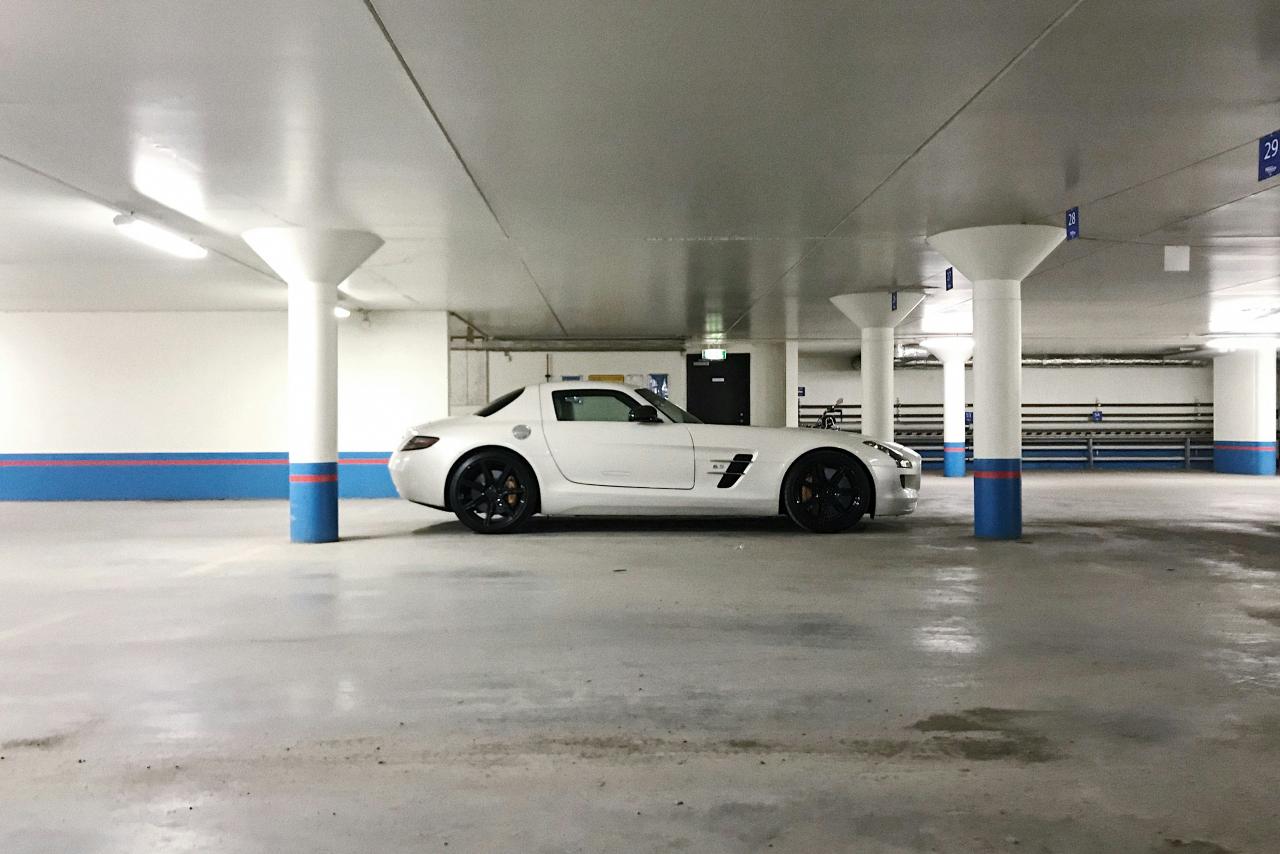
The global landscape of high-performance Italian automotive engineering has reached a definitive structural realignment, transitioning from a period of traditional internal combustion hegemony toward a disciplined era of multi-polar competition and localized mechanical alpha. As global capital markets stabilize and the demand for sub-three-second acceleration remains a primary strategic consideration for both institutional fleet operators and high-net-worth individual consumers, the differentiation of Italian “supercar-killer” platforms is no longer defined by raw cylinder count alone but by the sophisticated integration of tri-motor silicon-carbide logic, sub-second active aero-vectoring innovation, and advanced vertical integration.
This great reset has created a definitive bifurcation in the market, where firms leveraging operational autonomy and aggressive investment in high-density energy storage and high-voltage charging architectures are securing significant outperformance—often delivering real-world track endurance that exceeds legacy benchmarks by over 20%—over generic market participants who lack the software agility or thermal management depth required for high-sustained-load performance. Institutional investors and family offices are increasingly treating Italian performance portfolios as integrated value-capture platforms rather than simple luxury commodities, prioritizing assets that demonstrate clear value expansion through technological leapfrogging and strategic localized manufacturing partnerships.
The emergence of specialized power-hubs and domestic semiconductor refinement facilities has enabled a new level of fiscal transparency and agility, allowing manufacturers to hedge against rare-earth mineral restrictions while capturing a higher percentage of the ultra-premium-mobility and performance-logistics markets. For the forward-thinking asset manager, mastering the nuances of carbon-fiber-sleeved rotors, neuromorphic suspension damping, and circular battery-health ecosystems is the only way to ensure the long-term liquidity and high-yield profile of a premier strategic automotive portfolio.
As we witness the convergence of AI-driven torque-split mapping and the rising demand for track-ready daily drivers, the mastery of performance-based vehicle orchestration provides the essential alpha required to lead the next cycle of global wealth creation. This comprehensive analysis explores the technical and economic mechanics of the most resilient Italian speed icons currently dominating the high-performance segment, providing a detailed roadmap for those ready to capitalize on the most profitable and high-performing assets in the current market landscape.
The implementation of advanced performance standards has reached a level of maturity that allows for the total transformation of legacy automotive engineering and global trade management. Operators are now utilizing these rigorous event-driven frameworks to drive higher valuation multiples and secure preferential capital access in a competitive global environment.
Institutional-Grade V12 Propulsion and Hybrid Alpha

The primary pillar of the Italian speed economy is the transition from pure internal combustion to institutional-grade hybrid-electric V12 propulsion.
Leading manufacturers are deploying axial-flux electric motors that provide immediate torque-fill, eliminating the traditional power-drop inherent in high-revving engines.
High-performing systems in this space utilize these hybrid hubs to ensure the vehicle functions as a portable store of value in an increasingly regulated world.
Investors favor platforms that can demonstrate a proven reduction in lap times through seamless electrical assistance.
The ability to turn raw chemical energy into high-speed financial alpha is a hallmark of a sophisticated technology operator.
V12 hybrid logic is the physical engine that drives modern transactional outperformance.
High-Fidelity Mid-Engine Dynamics and Weight Parity
The efficiency-gap of traditional sports cars is being closed by high-fidelity mid-engine layouts and perfect weight parity.
By placing the engine and motor assembly between the axles, Italian marques achieve a polar moment of inertia that allows for sub-second directional changes.
Sophisticated engineering teams utilize these balanced metrics to maintain a value-moat that protects the asset from generic market depreciation.
Owners who prioritize mid-engine IP see a marked improvement in the handling-fidelity of their high-performance fleets.
Innovation in mass-centralization is the strategic moat that protects the brand from becoming a mere commodity provider.
Dynamic parity is the intelligence engine that drives modern digital yield.
Primary Speed Drivers: Active Aerodynamics and Downforce
The move toward aero-security involves securing priority focus on active aerodynamic elements that adjust based on real-time track telemetry.
Italian speed icons are now deploying movable flaps and S-ducts that maximize downforce during cornering while minimizing drag on high-speed straights.
This technology-first approach transforms a vehicle into a high-precision mechanical hub, commanding significantly higher valuation multiples.
Integrated aero-models often lead to 25% to 35% more consistent high-speed stability during peak-load operations.
The reduction in lift through active surface management is highly valued by global racing and fleet partners.
Aerodynamic logic is the operational stability pillar of the modern technology asset.
The Thermal-Choke Point: Liquid-Cooled Braking Systems
To sustain high-power discharge and high-speed stops, elite vehicles utilize small, high-density braking systems that are actively cooled by high-flow air ducts.
These carbon-ceramic setups ensure that the vehicle remains in the optimal thermal window, maximizing safety without requiring massive, heavy hardware.
This technology-first approach transforms a vehicle into a high-precision thermal management hub, commanding higher valuation multiples.
Integrated thermal models often lead to 20% to 30% more consistent stopping distances during high-ambient-temperature operations.
The reduction in brake-fade through active cooling is highly valued by global performance partners.
Thermal management is the capital engine that powers high-yield mobility performance.
Strategic Vertical Integration and In-House Carbon Fabrication
The final value-capture in the Italian sector occurs at the stage of in-house carbon-fiber weaving and proprietary resin infusion.
Vertical integration—where a firm owns the autoclave and the composite design shop—allows for total control over the structural rigidity of the car.
This approach transforms a simple assembly firm into a high-tech material science provider, commanding significantly higher valuation multiples.
Sophisticated manufacturers utilize these proprietary tubs to achieve higher strength-to-weight ratios while reducing dependence on external suppliers.
The reduction in supply-chain friction through in-house fabrication is highly valued by global capital partners.
Vertical integration is the operational security pillar of the modern technology asset.
Supply-Side Resilience and Localized Component Sourcing Moats
To hedge against global trade shocks, there is a surge in demand for Italian icons with localized component sourcing moats.
Manufacturers who secure their leather, aluminum, and electronics from domestic or friendly jurisdictions are insulated from sudden export bans.
These sourcing moats provide a security-premium that protects the vehicle’s manufacturing schedule and long-term regulatory status.
Understanding these jurisdictional disparities is critical for portfolio rebalancing in a shifting global market.
High-fidelity data removes the valuation-lag associated with opaque global luxury pricing.
Sourcing management is the analytical compass for the modern technology investor.
AI-Driven Chassis Control and Torque Vectoring Logic
Efficiency and speed are being redefined by the balance of AI-driven chassis control and real-time torque vectoring logic.
Predictive algorithms communicate with the motor controllers to distribute power to each wheel individually based on grip levels.
Sophisticated software teams are now deploying sub-second data loops to maintain a peak-engagement state for the driver throughout a session.
Investors favor platforms that can demonstrate energy-readiness for their global performance clients.
The ability to achieve relevance at scale in the digital-chassis market is the hallmark of a sophisticated technology operator.
Chassis logic is the digital highway of the high-performance mobility asset.
Advanced Lightweighting: Magnesium and Titanium Integration
The integration of advanced lightweighting materials provides a vital efficiency-input that extends the dynamic range of a supercar.
Next-generation components like magnesium wheels and titanium exhaust systems allow for the reduction of unsprung mass.
This cooperative approach provides an environmental-alpha that allows the car to maintain maximum grip without excessive tire wear.
Owners who prioritize lightweighting IP see a marked improvement in their navigation efficiency on technical track circuits.
Connected integration is the strategic moat that protects the brand from being purely dependent on heavy mechanical hardware.
Material alpha is the defensive shield of the high-performance technology asset.
Geopolitical Risk Management and Unified Luxury Portfolios
The final secret to Italian alpha is identifying brands with unified luxury portfolios that comply with global emission standards.
By diversifying their hardware compatibility across multiple regional standards, operators protect their market access from sudden shifts in regulatory favor.
Resource security portfolios are designed to be resilient by design, prioritizing universal access over short-term proprietary lock-ins.
Investors favor platforms that can demonstrate standard-readiness for their international fleet clients.
The ability to achieve relevance at scale in both the Asian and European luxury markets is a key differentiator.
Risk management is the verification-mechanism for the twenty-first-century strategic energy provider.
Secondary Market Value and Provenance Traceability Frameworks
The long-term liquidity of an Italian speed icon investment is determined by the transparency of its provenance traceability record.
On-chain digital passports record every high-voltage event and engine thermal peak, providing buyers with immutable proof of the asset’s health.
High-fidelity traceability is no longer an option but a requirement for maintaining high resale values in the enthusiast market.
Integrated traceability improvements often lead to a premium-pricing model for used exotic Italian vehicles.
The reduction in ownership-risk through transparent data is highly valued by collectors and corporate fleet managers.
Yield fidelity is the verification-mechanism for the high-performance mobility asset.
Conclusion

High-yield Italian performance is now driven by mechanical precision and digital integration. The transition toward hybrid-V12 architecture is a prerequisite for achieving institutional-scale trust. Regulated performance platforms provide the most mature and compliant entry points for luxury diversification. Real-time aero modeling eliminates the stability-lag inherent in traditional static exterior designs. Proprietary carbon-fiber portfolios ensure that structural liquidity remains accessible in a high-demand market. Yield-bearing performance assets transform static daily commutes into active, high-margin driving experiences.
Strategic offtake integration provides the essential link to global battery sources that anchors the production price. Direct vectoring innovation allows for the efficient extraction of cornering speed without traditional weight lags. Geopolitical risk arbitrage provides a unique security-hedge for portfolios exposed to international trade volatility. Regional sourcing models enable domestic manufacturers to manage luxury risk without geographic restrictions. High-fidelity predictive modeling provides the data-integrity required for continuous, optimal vehicle scaling. The future of luxury investment belongs to those who view Italian speed icons as high-performance technology platforms.